
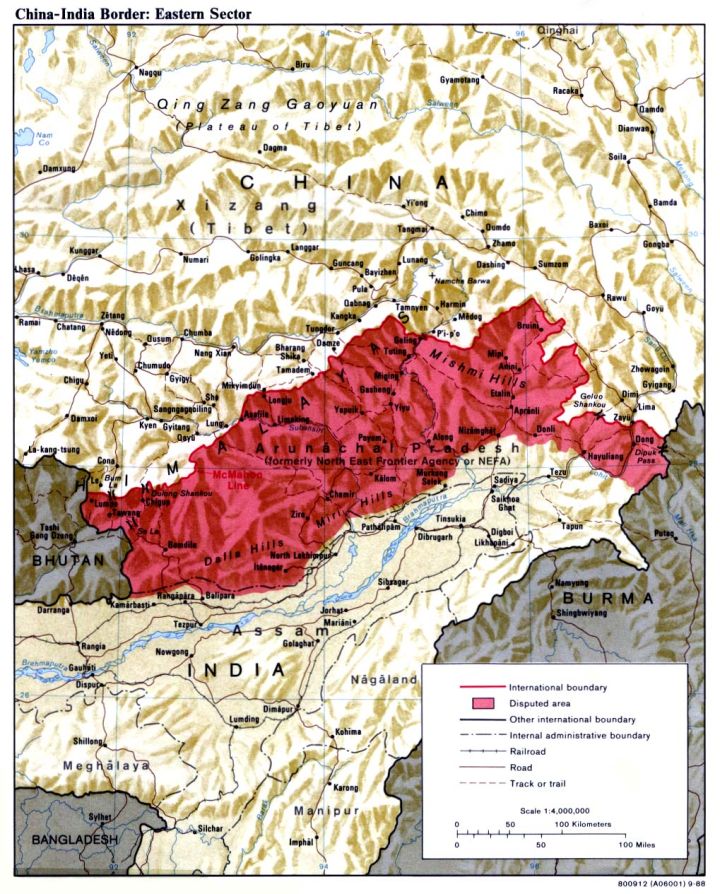
📷 Image: Wikimedia Commons / Central Intelligence Agency
Defence
India Finalizes 27 Line of Actual Control Sites in Arunachal Pradesh
✍️ Business Today
🗓 07 Aug 2026, 09:48 PM
👁 54
India has officially standardized 27 Line of Actual Control (LAC) sites along its border with China in Arunachal Pradesh, marking a decisive response to Beijing.
India has finalized 27 Line of Actual Control (LAC) sites along its border with China in the northeastern state of Arunachal Pradesh. The decision, announced by the Ministry of Defence, is part of a broader effort to clarify and formalise positions on the disputed frontier.
The move is seen as a firm reply to Beijing, following a series of diplomatic exchanges over border management. By standardising these sites, India aims to reduce ambiguity and potential flashpoints in the region.
All 27 sites are located within Arunachal Pradesh, a state that has been at the center of Sino-Indian border disputes for decades. The standardisation process involved detailed surveys and consultations with local authorities.
Defence analysts suggest that the action could strengthen India's strategic posture in the eastern sector and signal readiness to uphold its territorial integrity. The government has stated that the standardisation will not alter the existing status quo but will provide a clearer framework for future engagements.
The move is seen as a firm reply to Beijing, following a series of diplomatic exchanges over border management. By standardising these sites, India aims to reduce ambiguity and potential flashpoints in the region.
All 27 sites are located within Arunachal Pradesh, a state that has been at the center of Sino-Indian border disputes for decades. The standardisation process involved detailed surveys and consultations with local authorities.
Defence analysts suggest that the action could strengthen India's strategic posture in the eastern sector and signal readiness to uphold its territorial integrity. The government has stated that the standardisation will not alter the existing status quo but will provide a clearer framework for future engagements.