
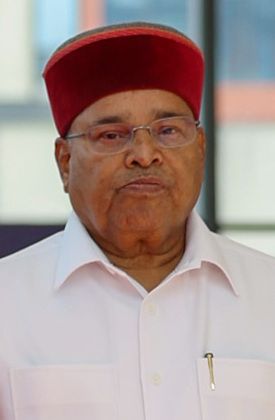
📷 Image: Wikimedia Commons / Prime Minister's Office
Politics
Tribal leader Damor says Mahendrajeet Malviya’s old hold ends as he returns to Congress
✍️ Amar Ujala · Rajasthan
🗓 20 Aug 2026, 07:37 PM
👁 21
Thawar Chand Damor, a tribal leader, said Mahendrajeet Singh Malviya’s longstanding dominance in the tribal belt has ended after his re‑entry into the Congress, and that younger leaders will now step forward.
Thawar Chand Damor, a prominent figure in Rajasthan's tribal regions, publicly remarked that the era of Mahendrajeet Singh Malviya’s dominance has come to an end. Damor made the comment in response to Malviya’s recent decision to re‑join the Indian National Congress, a move that reshapes local political equations.
According to Damor, the shift signals a transition toward a new generation of leadership. He emphasized that the tribal electorate is now looking for younger representatives who can address contemporary challenges, marking a departure from the long‑standing influence of senior politicians like Malviya.
Political analysts note that Malviya’s return to Congress could alter the balance of power in the constituency, but Damor’s statement suggests that the party will need to accommodate emerging youth voices to retain support in the tribal belt.
The remarks were made during a local gathering, where Damor urged political parties to recognize the changing aspirations of tribal voters and to promote fresh leadership.
While the full impact of Malviya’s move remains to be seen, Damor’s observation highlights a broader trend of generational change within Rajasthan’s tribal politics.
According to Damor, the shift signals a transition toward a new generation of leadership. He emphasized that the tribal electorate is now looking for younger representatives who can address contemporary challenges, marking a departure from the long‑standing influence of senior politicians like Malviya.
Political analysts note that Malviya’s return to Congress could alter the balance of power in the constituency, but Damor’s statement suggests that the party will need to accommodate emerging youth voices to retain support in the tribal belt.
The remarks were made during a local gathering, where Damor urged political parties to recognize the changing aspirations of tribal voters and to promote fresh leadership.
While the full impact of Malviya’s move remains to be seen, Damor’s observation highlights a broader trend of generational change within Rajasthan’s tribal politics.