
📷 Image: Wikimedia Commons / Prime Minister's Office, Government of India
National
PM Modi Inaugurates Two New Delhi Metro Corridors, Lays Foundation for Three More
✍️ Newsonair
🗓 16 Aug 2026, 08:36 AM
👁 57
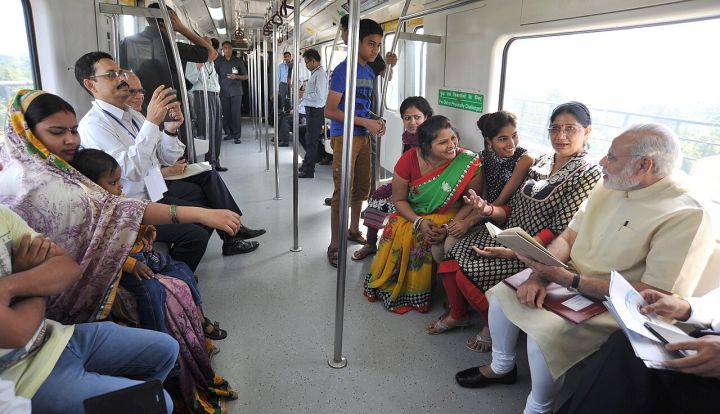
Prime Minister Narendra Modi inaugurated two new Delhi Metro corridors today and laid the foundation stone for three additional lines, marking a significant expansion of the capital's rapid transit network.
On Thursday, Prime Minister Narendra Modi conducted the inauguration of two new Delhi Metro corridors at the capital’s bustling transit hub.
The first corridor, the East-West Extension, spans 12 kilometres and adds 10 new stations, linking the industrial belt in East Delhi with the commercial heart in West Delhi. The second, the North-South Link, covers 9 kilometres and introduces 8 stations, improving connectivity between the northern suburbs and the central business district.
During the ceremony, Mr. Modi also laid the foundation stone for three forthcoming corridors: the Delhi–Gurgaon Express Line, the New Delhi–Noida Rapid Transit, and the Delhi–Faridabad Metro Link. These projects are slated for completion by 2028, with an estimated investment of ₹15,000 crore.
The expansion is expected to reduce travel time across the city, ease congestion on major roads, and boost economic activity by providing faster access to key commercial and residential zones.
The first corridor, the East-West Extension, spans 12 kilometres and adds 10 new stations, linking the industrial belt in East Delhi with the commercial heart in West Delhi. The second, the North-South Link, covers 9 kilometres and introduces 8 stations, improving connectivity between the northern suburbs and the central business district.
During the ceremony, Mr. Modi also laid the foundation stone for three forthcoming corridors: the Delhi–Gurgaon Express Line, the New Delhi–Noida Rapid Transit, and the Delhi–Faridabad Metro Link. These projects are slated for completion by 2028, with an estimated investment of ₹15,000 crore.
The expansion is expected to reduce travel time across the city, ease congestion on major roads, and boost economic activity by providing faster access to key commercial and residential zones.