
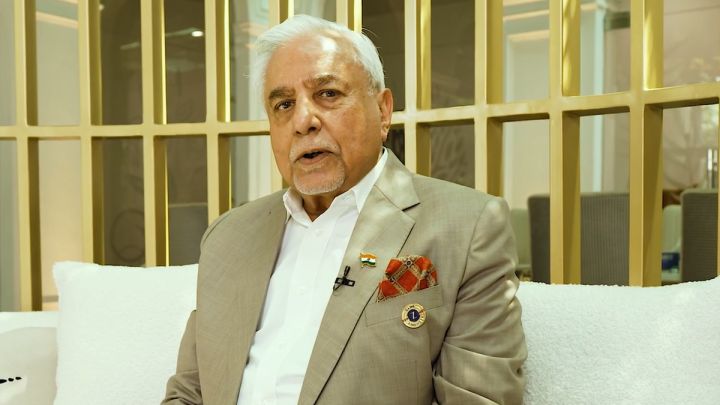
📷 Image: The Hindu (via NewsData)
Business
NCLT forms first-ever 5-member Bench to rule on Subhash Chandra's ₹22,000 crore repayment plan
✍️ The Hindu
🗓 01 Sep 2026, 06:48 AM
👁 3
The National Company Law Tribunal has constituted its first-ever five-member Bench to decide on a personal insolvency case involving Subhash Chandra, after a Division Bench failed to reach a majority verdict on claims exceeding ₹22,000 crore.
The National Company Law Tribunal (NCLT) has constituted its first-ever five-member Bench to adjudicate the personal insolvency case involving Essel Group founder Subhash Chandra. The move comes after a Division Bench was unable to arrive at a majority verdict on the matter.
The case involves claims amounting to more than ₹22,000 crore, making it one of the most significant personal insolvency proceedings to come before the tribunal. The formation of an expanded Bench is aimed at ensuring a decisive ruling on Chandra's proposed repayment plan.
A standard Division Bench of the NCLT typically comprises two members. However, when such a bench is evenly split, it becomes necessary to refer the matter to a larger bench to break the deadlock. The constitution of a five-member Bench marks an unprecedented step in the tribunal's functioning.
The tribunal will now examine Chandra's repayment plan and determine whether it meets the requirements under the personal insolvency framework. The decision is expected to have wide-ranging implications for high-value personal insolvency cases in India.
The case involves claims amounting to more than ₹22,000 crore, making it one of the most significant personal insolvency proceedings to come before the tribunal. The formation of an expanded Bench is aimed at ensuring a decisive ruling on Chandra's proposed repayment plan.
A standard Division Bench of the NCLT typically comprises two members. However, when such a bench is evenly split, it becomes necessary to refer the matter to a larger bench to break the deadlock. The constitution of a five-member Bench marks an unprecedented step in the tribunal's functioning.
The tribunal will now examine Chandra's repayment plan and determine whether it meets the requirements under the personal insolvency framework. The decision is expected to have wide-ranging implications for high-value personal insolvency cases in India.