📷 Image: Wikimedia Commons / Ministry of Information and Broadcasting
Health
Maharashtra's New Tool Aims to Revamp India's Child Malnutrition Measurement
✍️ The Week
🗓 22 Oct 2026, 02:17 PM
👁 17
A newly developed tool in Maharashtra promises to overhaul the methodology used across India to assess child malnutrition, offering more precise data for policy planning.
A team of researchers and health officials in Maharashtra has unveiled a new analytical tool designed to improve how child malnutrition is measured nationwide. The device combines digital data collection with advanced analytics to generate real‑time prevalence rates at the district level.
Current estimates of child malnutrition in India rely heavily on periodic household surveys, which can miss rapid changes and regional variations. Critics have pointed out that such gaps hinder effective targeting of nutrition programmes.
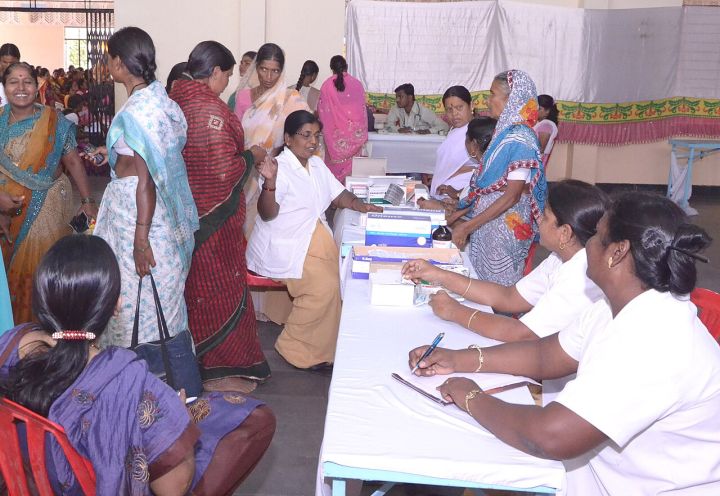
The Maharashtra tool addresses these shortcomings by integrating school health records, community health worker inputs, and biometric indicators into a unified platform. Its algorithm adjusts for age, gender and local socioeconomic factors, producing a more nuanced picture of under‑nutrition.
State health authorities plan to pilot the system in select districts before recommending its adoption by the National Family Health Survey framework. If scaled up, the tool could enable the central government to allocate resources more accurately and monitor the impact of interventions.
Officials involved in the project emphasized that the initiative aligns with the government's goal of eliminating child malnutrition by 2030, and they expect the enhanced data to guide more focused policy responses.