
📷 Image: Wikimedia Commons / Drashokk
Agriculture
Inside Assam’s Tea Industry: From Leaf to Global Market
✍️ kanaknews.com
🗓 26 Sep 2026, 09:31 PM
👁 14
A look at how Assam’s tea is cultivated, processed and exported, highlighting the region’s role in India’s tea legacy.
Assam, located in India’s northeast, remains the heartland of the country’s tea production, accounting for roughly half of the national output. The region’s humid climate, rich alluvial soils and abundant rainfall create ideal conditions for the Camellia sinensis var. assamica plant.
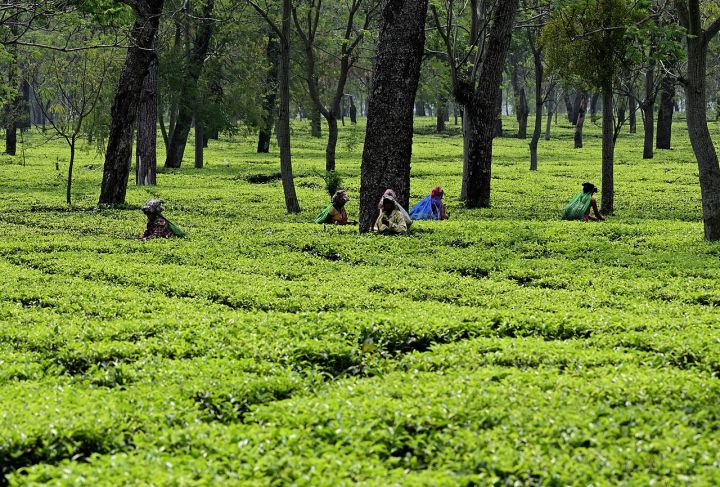
Tea estates in the Brahmaputra valley harvest leaves twice a year, during the spring flush and the main summer plucking. Skilled pluckers hand‑pick the tender buds and leaves, which are then quickly transported to nearby processing factories to preserve freshness.
In the factories, the leaves undergo withering, rolling, oxidation and drying in a tightly controlled sequence that defines the characteristic bold flavor of Assam tea. After grading and packaging, the finished product is dispatched to domestic markets and exported to key destinations such as the United Kingdom, the Middle East, Russia and the United States, where it commands a premium.
The industry supports millions of livelihoods, from plantation workers to logistics providers, and continues to be a cornerstone of India’s agricultural export earnings.
Tea estates in the Brahmaputra valley harvest leaves twice a year, during the spring flush and the main summer plucking. Skilled pluckers hand‑pick the tender buds and leaves, which are then quickly transported to nearby processing factories to preserve freshness.
In the factories, the leaves undergo withering, rolling, oxidation and drying in a tightly controlled sequence that defines the characteristic bold flavor of Assam tea. After grading and packaging, the finished product is dispatched to domestic markets and exported to key destinations such as the United Kingdom, the Middle East, Russia and the United States, where it commands a premium.
The industry supports millions of livelihoods, from plantation workers to logistics providers, and continues to be a cornerstone of India’s agricultural export earnings.