
📷 Image: Wikimedia Commons / NASA/GSFC/LaRC/JPL, MISR Team
Health
Delhi Air Quality Index Surpasses 400 Amid Rising Pollution Levels
✍️ Business Today
🗓 05 Nov 2026, 08:37 PM
👁 22
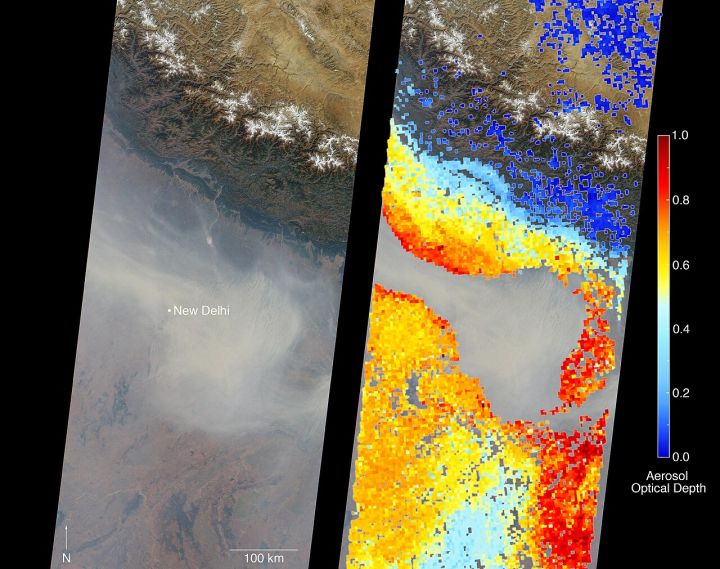
Delhi's Air Quality Index has exceeded 400, entering the hazardous category, according to recent readings. The spike raises concerns about respiratory health and the effectiveness of low‑cost personal air purifiers.
Delhi's latest air quality readings show an AQI of 410, placing the city in the hazardous range for the first time in several months. The high value indicates a concentration of fine particulate matter (PM2.5) that can penetrate deep into the lungs.
The government has urged residents to stay indoors, especially vulnerable groups such as children, the elderly and those with pre‑existing respiratory conditions. Several local health officials have advised the use of high‑efficiency particulate air (HEPA) filters and masks with N95 ratings.
While some consumers are turning to inexpensive neck‑mounted air purifiers priced around ₹2,500, experts warn that such devices may not provide adequate protection against the levels of pollution currently observed. They recommend larger, certified HEPA units for indoor use.
The Delhi Pollution Control Committee has announced plans to increase monitoring stations and to enforce stricter emission controls on vehicles and industries. Public transport authorities are also exploring the deployment of electric buses to curb vehicular emissions.
Health professionals emphasize that prolonged exposure to AQI levels above 400 can lead to severe respiratory and cardiovascular complications, urging the public to take precautionary measures and to seek medical advice if symptoms arise.