
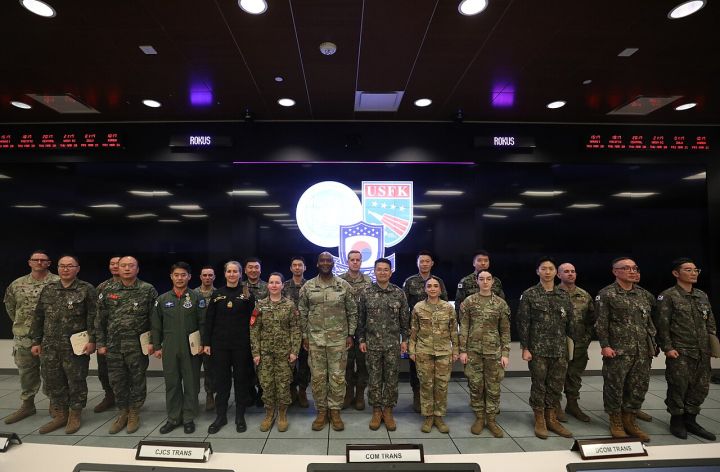
📷 Image: Wikimedia Commons / Staff Sgt. Ian Vega-Cerezo
Defence
US‑South Korea Scale Down Joint Military Exercises
✍️ Devdiscourse
🗓 18 Aug 2026, 03:16 PM
👁 62
The United States and South Korea announced a reduction in the frequency and scope of their annual "Shield" joint military drills, citing a shift in strategic priorities and a desire to focus on other security challenges.
On Monday, the U.S. Department of Defense and the Republic of Korea Armed Forces released a joint statement announcing a cutback in the annual "Shield" exercises that have been conducted since 2018. The decision comes as both nations reassess their strategic posture amid evolving regional threats.
The statement noted that the exercises will be held twice a year instead of the previous quarterly schedule, and that the scope of maneuvers will be narrowed to focus on air and naval components rather than large-scale ground operations. Officials said the change aims to free up resources for other priorities, including cyber defense and counter‑terrorism.
Defense Secretary Lloyd Austin and South Korean Defense Minister Shin Won‑ho emphasized that the reduction does not signal a weakening of the alliance. "We remain committed to a strong, flexible partnership," Austin said in a brief interview.
The move follows a broader trend of U.S. military realignment in the Indo‑Pacific, as Washington seeks to balance deterrence against North Korea with support for allies in the region.
The first scaled‑down exercise is scheduled for late October, with a full briefing to be held for senior officials in Washington next week.
The statement noted that the exercises will be held twice a year instead of the previous quarterly schedule, and that the scope of maneuvers will be narrowed to focus on air and naval components rather than large-scale ground operations. Officials said the change aims to free up resources for other priorities, including cyber defense and counter‑terrorism.
Defense Secretary Lloyd Austin and South Korean Defense Minister Shin Won‑ho emphasized that the reduction does not signal a weakening of the alliance. "We remain committed to a strong, flexible partnership," Austin said in a brief interview.
The move follows a broader trend of U.S. military realignment in the Indo‑Pacific, as Washington seeks to balance deterrence against North Korea with support for allies in the region.
The first scaled‑down exercise is scheduled for late October, with a full briefing to be held for senior officials in Washington next week.