
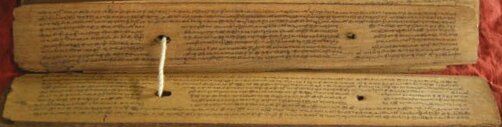
📷 Image: Wikimedia Commons / Unknown scribe
Education
UNESCO Grants World Heritage Status to 1905‑Discovered Kautilya Arthashastra Manuscript
✍️ Asianet Newsable
🗓 11 Nov 2026, 08:46 AM
👁 15
UNESCO has officially recognized the Arthashastra manuscript, discovered in 1905 and attributed to ancient strategist Kautilya, as a world heritage document. The designation highlights its historical and scholarly importance.
The United Nations Educational, Scientific and Cultural Organization (UNESCO) has conferred world heritage status on a manuscript of the Arthashastra, the ancient treatise on statecraft and economics attributed to Kautilya. The document, first unearthed by scholars in 1905, is considered one of the most comprehensive sources on ancient Indian political theory.
UNESCO’s decision follows a detailed evaluation by its Memory of the World Programme, which cited the manuscript’s rarity, its well‑preserved Sanskrit text, and its influence on subsequent governance models across South Asia. Experts say the recognition will boost efforts to digitize and conserve the fragile parchment for future research.
The manuscript is currently housed in the National Archives of India, where curators plan to display it as part of a special exhibition on India’s intellectual heritage. Scholars anticipate that the UNESCO label will attract international academic interest and funding for further study of the Arthashastra’s economic and administrative insights.
The move also underscores India’s broader push to highlight its ancient contributions to political thought on the global stage, aligning with recent initiatives to safeguard cultural artifacts worldwide.