
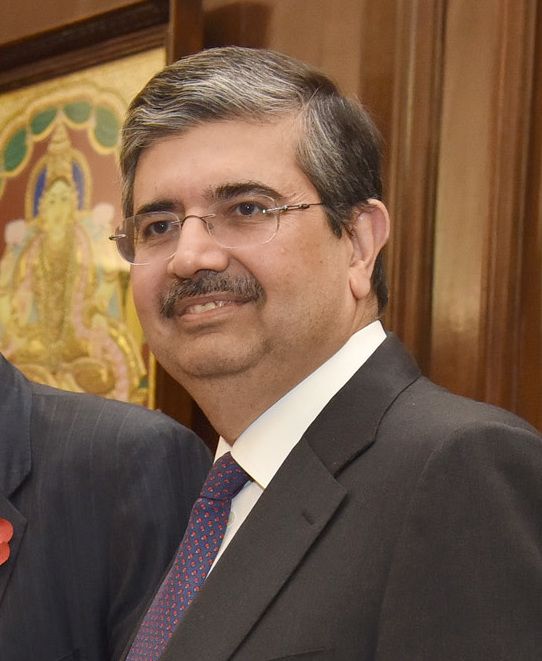
📷 Image: Wikimedia Commons / Ministry of Finance of India
Business
Uday Kotak: Let Rupee Find Its Own Level, No Artificial Support Needed
✍️ Business Standard
🗓 14 Oct 2026, 09:48 AM
👁 23
Business Standard's Uday Kotak has stated that the Indian rupee should be permitted to determine its value through market forces rather than artificial intervention.
Uday Kotak, the founder and editor-in-chief of Business Standard, has weighed in on the current trajectory of the Indian rupee. In a recent statement, he emphasized that the currency should be allowed to find its own equilibrium level in the foreign exchange market.
Kotak suggested that market forces, rather than artificial support or rigid interventions, are the most effective mechanism for determining the true value of the rupee. His comments reflect a broader economic perspective that favors flexible exchange rate regimes which respond to supply and demand dynamics.
The remark comes at a time when the rupee's performance is closely monitored by investors and policymakers. By advocating for a self-correcting market level, Kotak highlights the importance of letting economic fundamentals dictate currency valuation.
This stance aligns with the views of many economists who argue that excessive management of the currency can sometimes lead to imbalances. The focus remains on ensuring that the rupee's value reflects the underlying health of the Indian economy.
Kotak suggested that market forces, rather than artificial support or rigid interventions, are the most effective mechanism for determining the true value of the rupee. His comments reflect a broader economic perspective that favors flexible exchange rate regimes which respond to supply and demand dynamics.
The remark comes at a time when the rupee's performance is closely monitored by investors and policymakers. By advocating for a self-correcting market level, Kotak highlights the importance of letting economic fundamentals dictate currency valuation.
This stance aligns with the views of many economists who argue that excessive management of the currency can sometimes lead to imbalances. The focus remains on ensuring that the rupee's value reflects the underlying health of the Indian economy.