
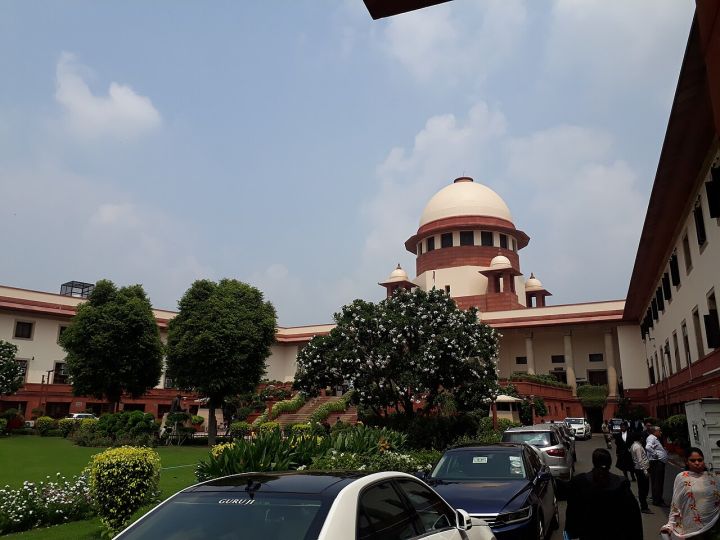
📷 Image: Wikimedia Commons / Pinakpani
Politics
Supreme Court Rules Bihar SIR Exclusion From Voter List Won’t Strip Other Rights
✍️ Live Law
🗓 25 Aug 2026, 09:03 PM
👁 37
The Supreme Court clarified that removal from the Bihar electoral roll does not affect a citizen’s entitlement to other statutory rights.
The apex court delivered a landmark judgment on a petition challenging the Bihar State Election Commission’s decision to delete names from the electoral roll. The bench held that exclusion from the voter list is a procedural matter confined to electoral eligibility and does not automatically revoke a citizen’s right to access welfare schemes, education benefits, or other statutory entitlements.
Petitioners had argued that being struck off the roll barred them from availing government programmes that rely on voter identification. The Court rejected this contention, emphasizing that the electoral register and the roster of beneficiaries for social schemes are separate legal instruments.
The judgment directs state authorities to ensure that removal from the electoral roll does not impede the delivery of any other rights guaranteed under law. It also calls for clear procedural safeguards when updating the roll, to avoid inadvertent denial of benefits.
Legal experts view the ruling as a reinforcement of the principle that civic participation and access to public services are distinct, preventing future misuse of electoral data to curtail citizen rights.
Petitioners had argued that being struck off the roll barred them from availing government programmes that rely on voter identification. The Court rejected this contention, emphasizing that the electoral register and the roster of beneficiaries for social schemes are separate legal instruments.
The judgment directs state authorities to ensure that removal from the electoral roll does not impede the delivery of any other rights guaranteed under law. It also calls for clear procedural safeguards when updating the roll, to avoid inadvertent denial of benefits.
Legal experts view the ruling as a reinforcement of the principle that civic participation and access to public services are distinct, preventing future misuse of electoral data to curtail citizen rights.