
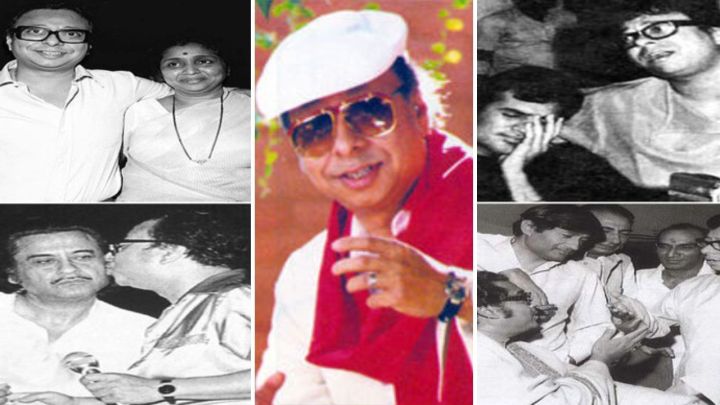
📷 Image: Bollyy (via NewsData)
Entertainment
Remembering Pancham Da: Rahul Dev Burman's Revolutionary Impact on Indian Music
✍️ Bollyy
🗓 28 Jun 2026, 05:46 AM
👁 39
On his 87th birth anniversary, we celebrate the enduring legacy of Rahul Dev Burman, the visionary composer who redefined Indian film music with his innovative fusion of genres and electronic sounds.
June 27 marks the 87th birth anniversary of Rahul Dev Burman, affectionately known as Pancham Da, a music director widely credited with revolutionizing Indian cinema's soundscape. Over a career spanning the 1960s to the 1990s, Burman composed for 331 films, leaving an indelible mark with his melodious and memorable tunes.
Burman's genius lay in his eclectic style, which masterfully blended diverse musical influences. While deeply inspired by Bengali folk music, he fearlessly incorporated elements from Western, Latin, Oriental, and Arabic music, creating a fresh and unique sound. He is particularly noted for introducing electronic rock into Bollywood, most notably in romantic films of the era, often featuring actors like Rajesh Khanna.
His early life was steeped in music, being the son of renowned composer Sachin Dev Burman. After assisting his father and working on several films, Burman received his independent break with 'Chhote Nawab' in 1961. However, his true breakthrough came with the 1966 musical thriller 'Teesri Manzil,' whose soundtrack became a massive hit, cementing his position as a leading composer. Subsequent successes like 'Padosan,' 'Aradhana,' 'Kati Patang,' and 'Sholay' further solidified his status, with his music defining the soundtracks of the 1970s.
Despite facing a dip in popularity in the 1980s, Burman continued to experiment. His final masterpiece, the soundtrack for '1942 – A Love Story,' released posthumously in 1994, earned him critical acclaim and a Filmfare Award, a testament to his enduring talent and the timeless appeal of his music.
Burman's genius lay in his eclectic style, which masterfully blended diverse musical influences. While deeply inspired by Bengali folk music, he fearlessly incorporated elements from Western, Latin, Oriental, and Arabic music, creating a fresh and unique sound. He is particularly noted for introducing electronic rock into Bollywood, most notably in romantic films of the era, often featuring actors like Rajesh Khanna.
His early life was steeped in music, being the son of renowned composer Sachin Dev Burman. After assisting his father and working on several films, Burman received his independent break with 'Chhote Nawab' in 1961. However, his true breakthrough came with the 1966 musical thriller 'Teesri Manzil,' whose soundtrack became a massive hit, cementing his position as a leading composer. Subsequent successes like 'Padosan,' 'Aradhana,' 'Kati Patang,' and 'Sholay' further solidified his status, with his music defining the soundtracks of the 1970s.
Despite facing a dip in popularity in the 1980s, Burman continued to experiment. His final masterpiece, the soundtrack for '1942 – A Love Story,' released posthumously in 1994, earned him critical acclaim and a Filmfare Award, a testament to his enduring talent and the timeless appeal of his music.