
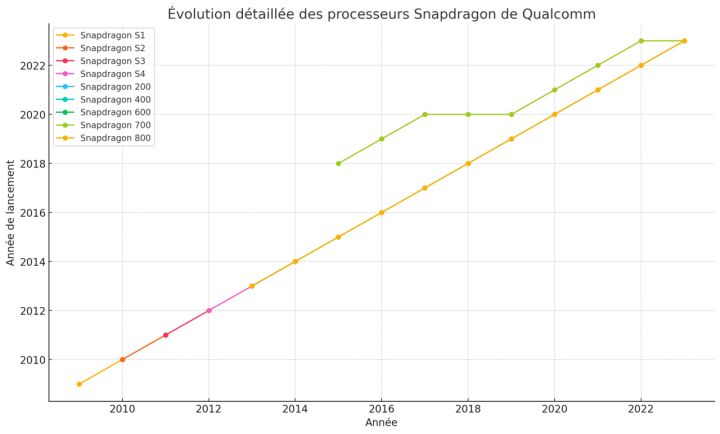
📷 Image: Wikimedia Commons / ChatGPT 4o
Technology
Qualcomm Unveils Two New AI‑Focused Smartphone Chips, Shares Slip After Hours
✍️ newsable.asianetnews.com
🗓 23 Sep 2026, 04:16 AM
👁 6
Qualcomm announced the launch of two new smartphone processors designed to boost on‑device AI capabilities, while its shares fell slightly in after‑hours trading.
Qualcomm, the U.S. chipmaker, introduced two new smartphone processors aimed at strengthening artificial‑intelligence functions directly on mobile devices. The announcement comes as the company intensifies its strategy to embed more AI processing power in its silicon, reducing reliance on cloud‑based services.
The new chips are positioned to meet growing demand from handset manufacturers for faster, more efficient AI workloads such as image recognition, voice assistants and real‑time translation. By handling these tasks on‑device, Qualcomm expects to improve performance while conserving battery life.
Following the launch, Qualcomm’s shares (ticker QCOM) edged lower in after‑hours trading, indicating a cautious market reaction despite the product rollout. Analysts noted that investors are weighing the competitive landscape, including rival chip providers, as the company seeks to maintain its lead in the premium smartphone segment.
Industry observers see the move as part of a broader push by semiconductor firms to capture the next wave of mobile innovation, where AI capabilities are becoming a key differentiator for future smartphones.
The new chips are positioned to meet growing demand from handset manufacturers for faster, more efficient AI workloads such as image recognition, voice assistants and real‑time translation. By handling these tasks on‑device, Qualcomm expects to improve performance while conserving battery life.
Following the launch, Qualcomm’s shares (ticker QCOM) edged lower in after‑hours trading, indicating a cautious market reaction despite the product rollout. Analysts noted that investors are weighing the competitive landscape, including rival chip providers, as the company seeks to maintain its lead in the premium smartphone segment.
Industry observers see the move as part of a broader push by semiconductor firms to capture the next wave of mobile innovation, where AI capabilities are becoming a key differentiator for future smartphones.