
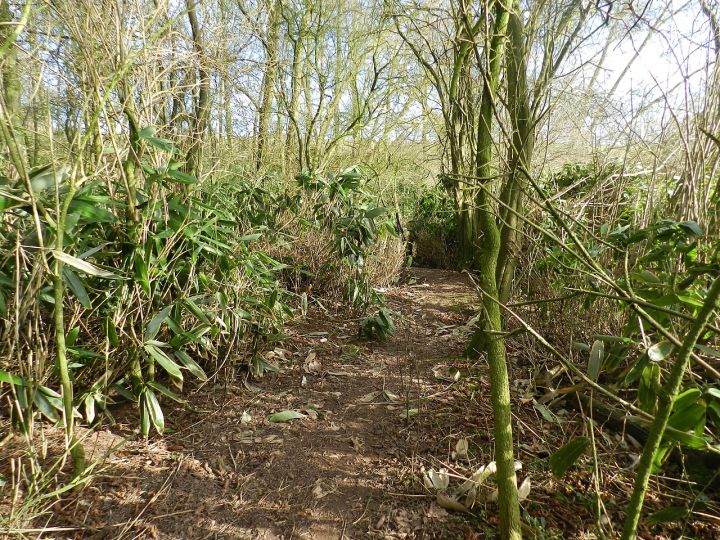
📷 Image: Wikimedia Commons / Peter Barr
Agriculture
Punjab adopts bamboo cultivation as diversification; Centre sanctions Rs 2.49 crore
✍️ The Indian Express
🗓 20 Aug 2026, 01:36 PM
👁 37
The Punjab government has identified bamboo cultivation as a new diversification avenue for farmers, and the Union government has approved a grant of Rs 2.49 crore to support the initiative.
Punjab's agricultural department is promoting bamboo cultivation as an alternative livelihood for farmers facing shrinking returns from traditional crops. The move aims to diversify income sources and tap into the growing market for bamboo products such as furniture, handicrafts and bio‑energy.
The Union Ministry of Agriculture and Farmers' Welfare has cleared a central assistance of Rs 2.49 crore for the scheme. The funds will be channelled through the state's horticulture and farm‑development programmes to set up nurseries, provide saplings and train farmers in best‑practice cultivation techniques.
State officials expect the initiative to generate modest but steady earnings for smallholders, especially in rain‑fed and marginal lands where bamboo thrives with minimal inputs. The programme also aligns with the government's broader push for sustainable, climate‑resilient farming.
Implementation will begin with pilot projects in districts with suitable soil and water conditions, followed by scaling up based on farmer response and market demand.
The Union Ministry of Agriculture and Farmers' Welfare has cleared a central assistance of Rs 2.49 crore for the scheme. The funds will be channelled through the state's horticulture and farm‑development programmes to set up nurseries, provide saplings and train farmers in best‑practice cultivation techniques.
State officials expect the initiative to generate modest but steady earnings for smallholders, especially in rain‑fed and marginal lands where bamboo thrives with minimal inputs. The programme also aligns with the government's broader push for sustainable, climate‑resilient farming.
Implementation will begin with pilot projects in districts with suitable soil and water conditions, followed by scaling up based on farmer response and market demand.