
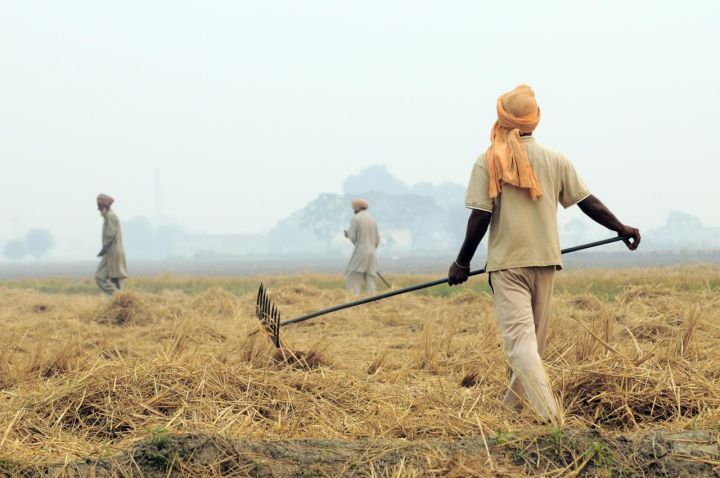
📷 Image: Wikimedia Commons / CIAT
Agriculture
Over 3,000 Stubble Burning Cases Reported in Punjab, Heightening Delhi’s Air Pollution Woes
✍️ India Today
🗓 07 Nov 2026, 11:36 AM
👁 14
More than 3,000 incidents of stubble burning have been recorded in Punjab, prompting heightened concerns over air quality in the national capital, Delhi.
Punjab's agricultural sector has seen the number of reported stubble burning incidents exceed 3,000, according to recent data. The surge in field fires is being closely monitored as it coincides with a noticeable rise in particulate matter levels over Delhi. Environmental agencies have warned that the smoke from the burnt residue can travel several hundred kilometres, aggravating the capital's already strained air quality.
Delhi's pollution control authorities have issued alerts, urging residents to limit outdoor activities and adopt protective measures. While the exact contribution of Punjab's stubble burning to Delhi's haze is still being quantified, experts note that such large‑scale agricultural fires are a known seasonal source of fine particles and carbon monoxide.
State officials in Punjab have reiterated the need for farmers to adopt alternative residue management practices, such as mechanised removal or crop‑rotation techniques, to curb the practice. The central government continues to promote subsidised equipment and awareness campaigns aimed at reducing reliance on open‑field burning.
The situation underscores the inter‑state nature of air‑quality challenges in northern India, where agricultural cycles, weather patterns, and urban emissions intersect. Continued coordination between Punjab and Delhi is essential to mitigate health risks and comply with national air‑quality standards.