
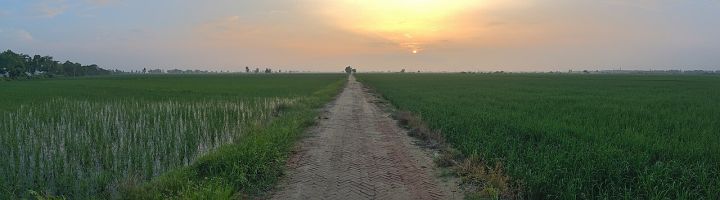
📷 Image: Wikimedia Commons / UnpetitproleX
Agriculture
Only 7% of Haryana Paddy‑Straw Baling Farmers Get Paid, CEEW Finds
✍️ Business Standard
🗓 29 Oct 2026, 01:56 AM
👁 17
A CEEW survey reveals that just seven percent of Haryana farmers who bale paddy straw receive payment from buyers, highlighting a cash‑flow challenge for the majority.
A recent survey by the Centre for Environment Education and Welfare (CEEW) indicates that only 7% of farmers in Haryana who bale paddy straw are actually paid by the buyers who purchase the bales. The data, reported by Business Standard, points to a stark mismatch between the volume of straw being baled and the payments received.
Baling paddy straw has been promoted as an alternative to open‑field burning, a practice that contributes to severe air pollution in the region. While the policy encourages farmers to collect and bale the residue, the low payment rate suggests that many buyers either reject the bales or delay payments, leaving farmers with unsold stock.
The financial strain on the majority of farmers could undermine the effectiveness of the anti‑burning initiative, as unsold bales may eventually be discarded or burned. CEEW has called for stronger market linkages and timely payment mechanisms to ensure that the effort to curb stubble burning translates into tangible economic benefits for growers.
If the payment gap persists, the state may need to revisit its support schemes for straw management, potentially introducing subsidies or guaranteed purchase agreements to protect farmers' incomes and sustain the environmental gains of reduced burning.