
📷 Image: Wikimedia Commons / NASA/JPL
Science
NASA’s Voyager Golden Record Features Indian Music, Taj Mahal Images and Traffic Sounds
✍️ News18
🗓 19 Nov 2026, 06:02 AM
👁 14
NASA’s interstellar Voyager spacecraft carries a golden record that includes a piece of Indian music, an image of the Taj Mahal and recordings of Indian traffic sounds.
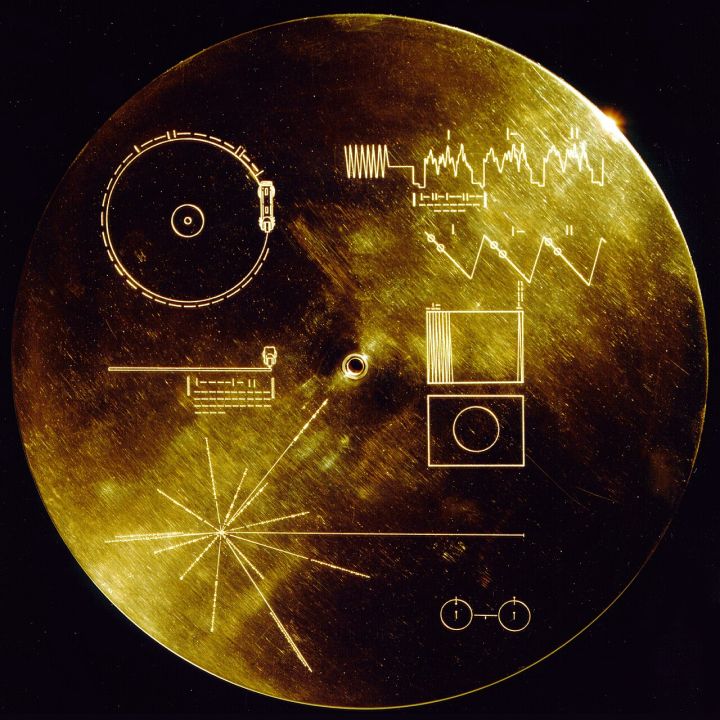
NASA’s Voyager missions, launched in 1977, each carry a 12‑inch gold‑plated copper disc known as the Golden Record. Designed as a time capsule for any intelligent life that might encounter it, the record contains sounds and images that portray the diversity of life on Earth.
Among the 27 tracks on the disc is a selection of Indian cultural material: a recording of traditional Indian music, a high‑resolution photograph of the Taj Mahal and ambient recordings of traffic from Indian streets. These elements were chosen to represent the subcontinent’s rich artistic heritage and everyday soundscape.
The Golden Record now travels beyond the solar system aboard Voyager 1 and Voyager 2, expected to drift for billions of years. Its inclusion of Indian content underscores NASA’s intent to showcase a truly global snapshot of humanity to any potential extraterrestrial listeners.
The disc also carries a cartridge and stylus, along with printed instructions in multiple languages, enabling any discoverer to play the recordings and decode the images.