
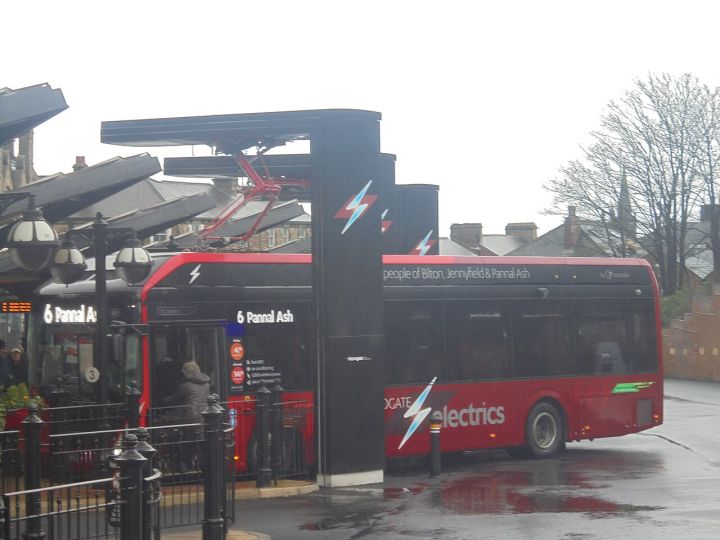
📷 Image: Wikimedia Commons / Mtaylor848
Automobile
Korba to Receive 40 Electric Buses Ahead of Diwali, Boosting Public Transport
✍️ Indianmasterminds
🗓 12 Oct 2026, 02:36 AM
👁 13
The Chhattisgarh government will deploy 40 electric buses in Korba before Diwali, aiming to improve city connectivity and reduce emissions.
The state transport department announced that 40 electric buses will be added to Korba's public‑transport fleet before the upcoming Diwali festival. The rollout is part of a broader push to modernise urban mobility in Chhattisgarh and to meet national targets for cleaner transportation.
The buses are scheduled to arrive in phases over the next two months, with the first batch expected to be operational by early November. All vehicles will be powered by locally sourced lithium‑ion batteries and will run on existing city routes, offering commuters a zero‑emission alternative to diesel‑run services.
Officials expect the new fleet to reduce traffic‑related pollution and to provide a more reliable commuting option for residents, especially during the festive period when travel demand spikes. The initiative also aligns with the central government's push for electric mobility in tier‑2 and tier‑3 cities.
State authorities indicated that the project is funded through a combination of state budget allocations and central scheme support, and that similar deployments are planned for other towns in the state in the coming years.
The buses are scheduled to arrive in phases over the next two months, with the first batch expected to be operational by early November. All vehicles will be powered by locally sourced lithium‑ion batteries and will run on existing city routes, offering commuters a zero‑emission alternative to diesel‑run services.
Officials expect the new fleet to reduce traffic‑related pollution and to provide a more reliable commuting option for residents, especially during the festive period when travel demand spikes. The initiative also aligns with the central government's push for electric mobility in tier‑2 and tier‑3 cities.
State authorities indicated that the project is funded through a combination of state budget allocations and central scheme support, and that similar deployments are planned for other towns in the state in the coming years.