
📷 Image: Wikimedia Commons / Raghu Naik NC
Education
Karnataka Literacy Programme Shows Progress Yet Gaps Remain, Study Finds
✍️ The Times of India
🗓 09 Oct 2026, 02:47 AM
👁 11
A recent study indicates that Karnataka’s literacy initiative has improved enrolment and reading levels, but significant disparities persist across regions and demographics.
A study cited by The Times of India reports that Karnataka’s state‑run literacy programme has recorded measurable gains over the past few years, with higher enrolment in adult education classes and modest rises in basic reading proficiency. The programme, launched to achieve universal literacy, targets both urban slums and remote villages.
Data from the survey show that overall literacy rates in the state have edged up by roughly two percentage points, and the number of participants completing the six‑month curriculum has increased by about 15 % compared with the previous cycle. Women and younger adults have shown the most noticeable improvements.
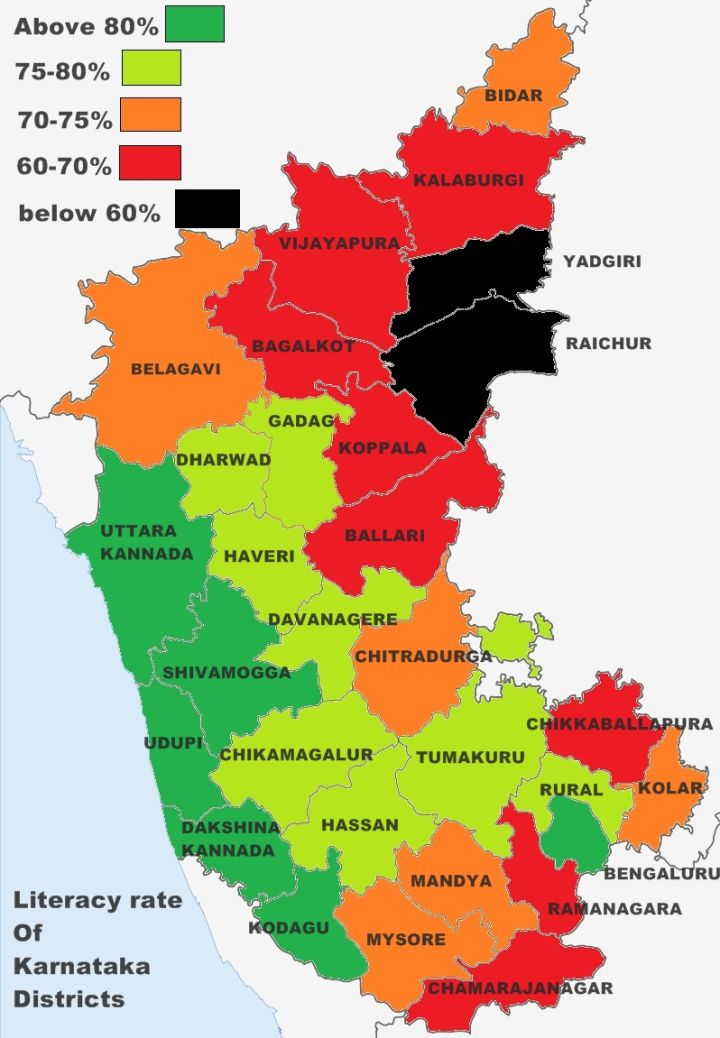
Despite these advances, the study highlights persistent gaps. Rural districts lag behind urban centres, and tribal and lower‑income groups continue to have lower completion rates. Gender disparity, while narrowed, still shows men outpacing women in higher‑level reading tests.
The report recommends intensified outreach in underserved areas, greater use of digital learning tools, and stronger monitoring mechanisms to ensure that the remaining gaps are closed before the state’s 2025 universal literacy target.
Data from the survey show that overall literacy rates in the state have edged up by roughly two percentage points, and the number of participants completing the six‑month curriculum has increased by about 15 % compared with the previous cycle. Women and younger adults have shown the most noticeable improvements.
Despite these advances, the study highlights persistent gaps. Rural districts lag behind urban centres, and tribal and lower‑income groups continue to have lower completion rates. Gender disparity, while narrowed, still shows men outpacing women in higher‑level reading tests.
The report recommends intensified outreach in underserved areas, greater use of digital learning tools, and stronger monitoring mechanisms to ensure that the remaining gaps are closed before the state’s 2025 universal literacy target.