
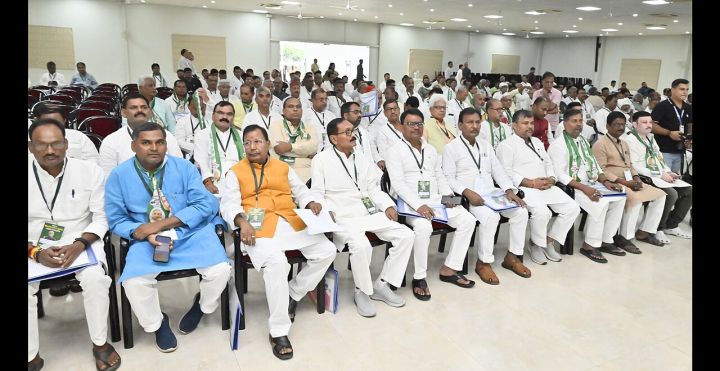
📷 Image: Wikimedia Commons / Information and public relations department Govern
Politics
JD(U) Opposes Uniform Civil Code Ahead of 2029 in Bihar
✍️ India Today
🗓 15 Sep 2026, 10:31 AM
👁 6
The Janata Dal (United) has publicly opposed the implementation of a Uniform Civil Code in Bihar, citing concerns over the state’s cultural diversity and legal autonomy.
The Janata Dal (United) has taken a clear stand against the proposed Uniform Civil Code (UCC) that is slated for implementation in India by 2029. In a statement released earlier this week, the party warned that a single set of laws for all citizens could undermine the cultural and religious diversity that characterizes Bihar.
JD(U) leaders argued that the UCC would erode the state’s long‑standing legal pluralism, which allows for personal laws based on religion. They also expressed concerns that the federal push for a uniform code might infringe on Bihar’s constitutional rights to legislate on matters of personal law.
The party’s opposition comes at a time when the central government has been pushing for the UCC as part of a broader agenda to streamline civil laws across the country. JD(U) has called for a more inclusive dialogue that respects regional differences and safeguards minority rights.
While the UCC remains a contentious issue nationwide, JD(U)’s stance highlights the political friction between national policy objectives and state‑level concerns about cultural preservation and legal autonomy.
JD(U) leaders argued that the UCC would erode the state’s long‑standing legal pluralism, which allows for personal laws based on religion. They also expressed concerns that the federal push for a uniform code might infringe on Bihar’s constitutional rights to legislate on matters of personal law.
The party’s opposition comes at a time when the central government has been pushing for the UCC as part of a broader agenda to streamline civil laws across the country. JD(U) has called for a more inclusive dialogue that respects regional differences and safeguards minority rights.
While the UCC remains a contentious issue nationwide, JD(U)’s stance highlights the political friction between national policy objectives and state‑level concerns about cultural preservation and legal autonomy.