
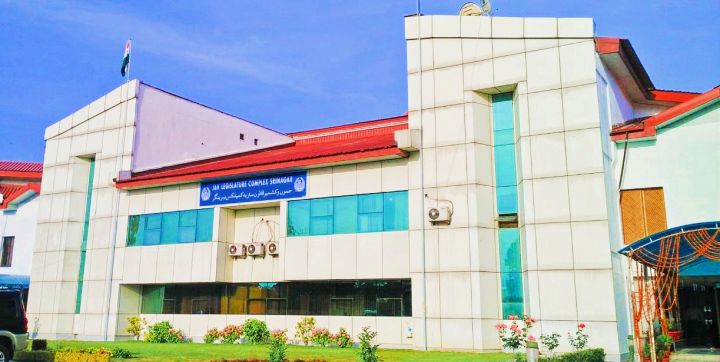
📷 Image: Wikimedia Commons / Ramchandra9
Politics
Jammu & Kashmir’s Legal Landscape Redefined After 2019 Constitutional Changes
✍️ Daily Excelsior
🗓 29 Sep 2026, 06:31 AM
👁 12
In August 2019, the Indian government revoked Jammu and Kashmir’s special constitutional status, converting the state into two union territories and initiating a series of legal reforms.
The Indian Parliament passed the Jammu and Kashmir Reorganisation Act in August 2019, formally abrogating Article 370 that had granted the state a unique degree of autonomy. The move removed the special status that allowed Jammu and Kashmir to have its own constitution and limited the applicability of central laws.
Following the revocation, the former state was split into two separate union territories – Jammu and Kashmir, with a legislature, and Ladakh, without one. This reorganisation placed both territories under direct central administration, altering the governance framework and the relationship between the centre and the region.
The legal overhaul extended a wide range of central statutes to the new union territories, including provisions on property ownership, criminal law, and taxation. These changes aim to integrate the territories more closely with the rest of India, though they have also sparked debate over federalism and regional identity.
Since the reforms, the administration has been implementing new land and investment policies, while political parties and civil society groups continue to discuss the long‑term impact on local governance and civil liberties.
Following the revocation, the former state was split into two separate union territories – Jammu and Kashmir, with a legislature, and Ladakh, without one. This reorganisation placed both territories under direct central administration, altering the governance framework and the relationship between the centre and the region.
The legal overhaul extended a wide range of central statutes to the new union territories, including provisions on property ownership, criminal law, and taxation. These changes aim to integrate the territories more closely with the rest of India, though they have also sparked debate over federalism and regional identity.
Since the reforms, the administration has been implementing new land and investment policies, while political parties and civil society groups continue to discuss the long‑term impact on local governance and civil liberties.