
📷 Image: Wikimedia Commons / Arvind Iyer from Mumbai, India
Business
Jammu & Kashmir Aims for 11,000 MW Hydropower Capacity by 2035
✍️ Daily Excelsior
🗓 28 Aug 2026, 10:34 PM
👁 64
The state government of Jammu & Kashmir announced a plan to develop 11,000 megawatts of hydropower capacity by 2035, aiming to boost renewable energy and reduce power deficits.
The Jammu & Kashmir administration has set an ambitious target of adding 11,000 MW of hydropower generation capacity by the year 2035. The goal was disclosed in a recent official statement that outlines the state's long‑term energy strategy.
If achieved, the new capacity would significantly augment the region’s renewable‑energy mix, lowering dependence on imported coal and diesel‑based power plants. Officials say the additional hydroelectric output could help bridge the chronic power shortfall that has hampered industrial growth and household consumption.
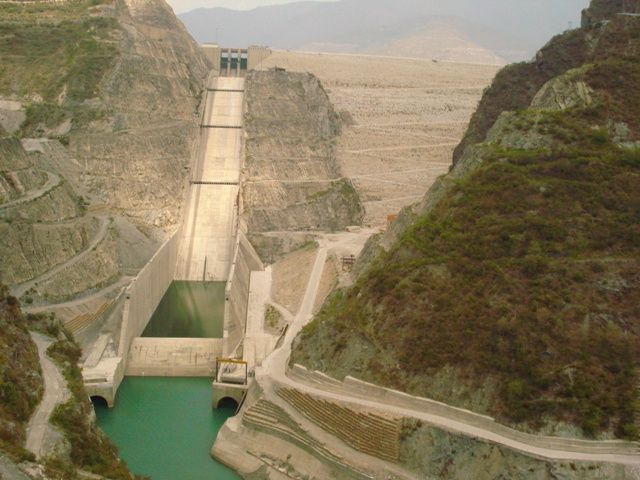
The government plans to identify and develop multiple river sites across the Himalayas, leveraging both run‑of‑the‑river and reservoir‑based projects. Funding is expected to come from a combination of state allocations, central‑government schemes, and private‑sector participation under public‑private partnership models.
Authorities acknowledge that terrain, environmental clearances and seasonal water flow variations pose challenges, but they stress that robust feasibility studies and modern turbine technology will mitigate risks and ensure sustainable operation.
If achieved, the new capacity would significantly augment the region’s renewable‑energy mix, lowering dependence on imported coal and diesel‑based power plants. Officials say the additional hydroelectric output could help bridge the chronic power shortfall that has hampered industrial growth and household consumption.
The government plans to identify and develop multiple river sites across the Himalayas, leveraging both run‑of‑the‑river and reservoir‑based projects. Funding is expected to come from a combination of state allocations, central‑government schemes, and private‑sector participation under public‑private partnership models.
Authorities acknowledge that terrain, environmental clearances and seasonal water flow variations pose challenges, but they stress that robust feasibility studies and modern turbine technology will mitigate risks and ensure sustainable operation.