
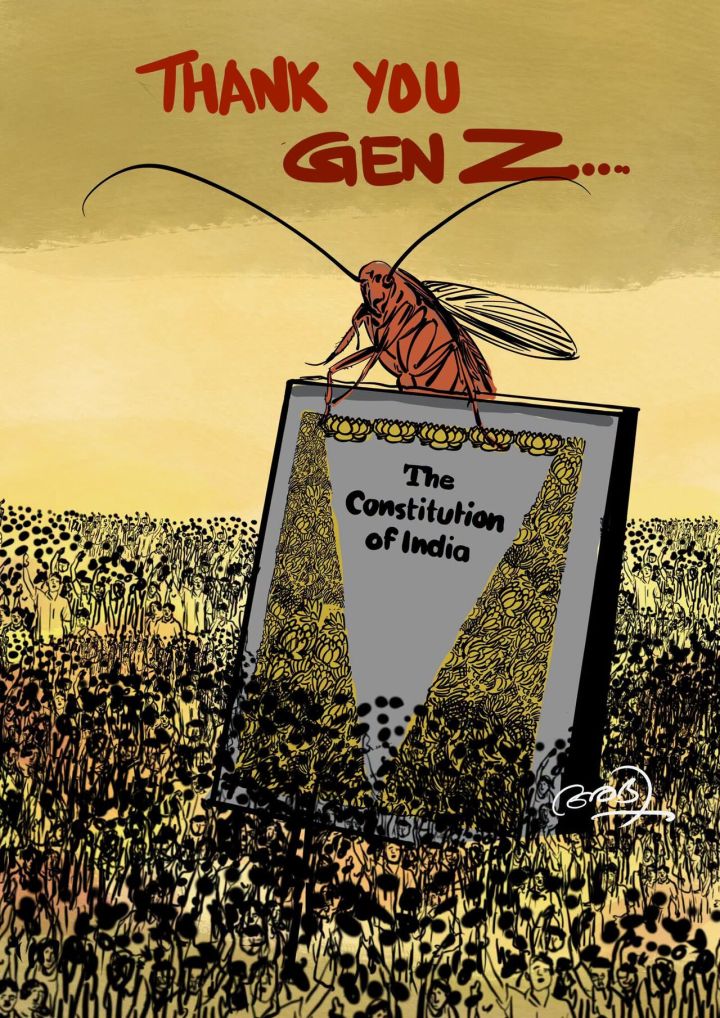
📷 Image: Wikimedia Commons / Abhilash Thiru
Politics
India’s ‘Cockroach’ Protesters Face Ongoing Legal Pressure
✍️ dw.com
🗓 01 Aug 2026, 10:37 AM
👁 34
Protesters who have adopted the nickname ‘Cockroach’ are reportedly under increasing legal scrutiny in India, with authorities pursuing multiple legal actions against them.
A group of Indian demonstrators who have taken on the moniker ‘Cockroach’ are reportedly facing mounting legal pressure from authorities. Reports indicate that several members of the protest group have been summoned to court, and police have begun filing charges against them for alleged violations of public order laws.
The protesters, who have been active in various public spaces, claim that their actions are a form of civil disobedience aimed at drawing attention to a broader social issue. However, the legal proceedings suggest that the government views their activities as potentially disruptive.
Law enforcement officials have cited multiple instances where the demonstrators allegedly obstructed traffic and disrupted public gatherings. In response, the authorities have invoked provisions of the Public Order Act to justify the legal actions.
The situation remains fluid, with the protest group reportedly preparing to appeal the charges in higher courts. Observers note that the case could set a precedent for how dissent is managed in India’s contemporary legal framework.
The protesters, who have been active in various public spaces, claim that their actions are a form of civil disobedience aimed at drawing attention to a broader social issue. However, the legal proceedings suggest that the government views their activities as potentially disruptive.
Law enforcement officials have cited multiple instances where the demonstrators allegedly obstructed traffic and disrupted public gatherings. In response, the authorities have invoked provisions of the Public Order Act to justify the legal actions.
The situation remains fluid, with the protest group reportedly preparing to appeal the charges in higher courts. Observers note that the case could set a precedent for how dissent is managed in India’s contemporary legal framework.