
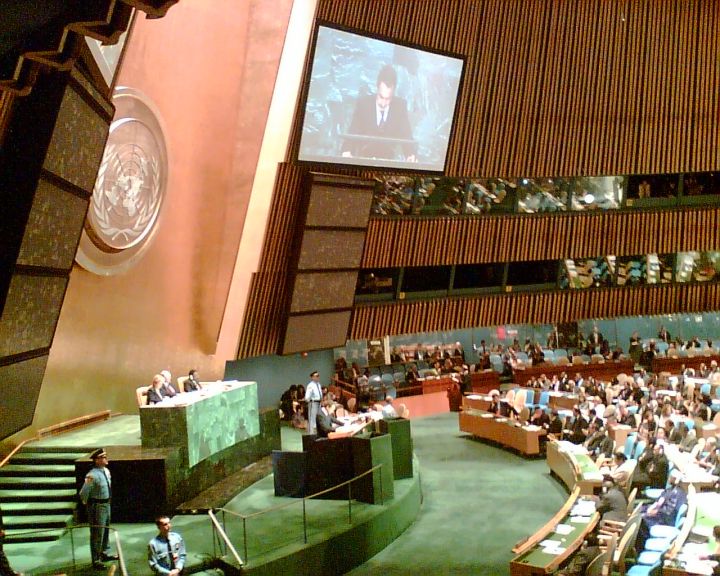
📷 Image: Wikimedia Commons / azugaldia
International
India says new UN Security Council permanent seats without veto would be ‘second‑class’
✍️ Telangana Today
🗓 27 Oct 2026, 01:02 PM
👁 13
India warned that any new permanent members of the UN Security Council without veto power would be treated as second‑class members, as reported by Telangana Today.
New Delhi reiterated its position that granting permanent seats on the United Nations Security Council without veto authority would create a hierarchy of members, relegating the newcomers to a "second‑class" status. The statement, cited by Telangana Today, reflects India's long‑standing call for comprehensive reform of the Security Council that balances representation with functional effectiveness.
India has consistently advocated for an expansion of the Council to include more developing nations, but it insists that any new permanent members must retain the veto power that currently defines the five existing members. Without this, New Delhi argues, the legitimacy and influence of the expanded body would be compromised.
The remarks come amid ongoing diplomatic discussions at the UN about possible reforms, with several countries pushing for additional permanent seats. India’s stance underscores its concern that a tiered system could undermine the principle of equality among member states.
While the exact timeline for any changes remains uncertain, New Delhi’s position signals that any proposal lacking veto rights for new permanent members will face strong opposition from India in future negotiations.