
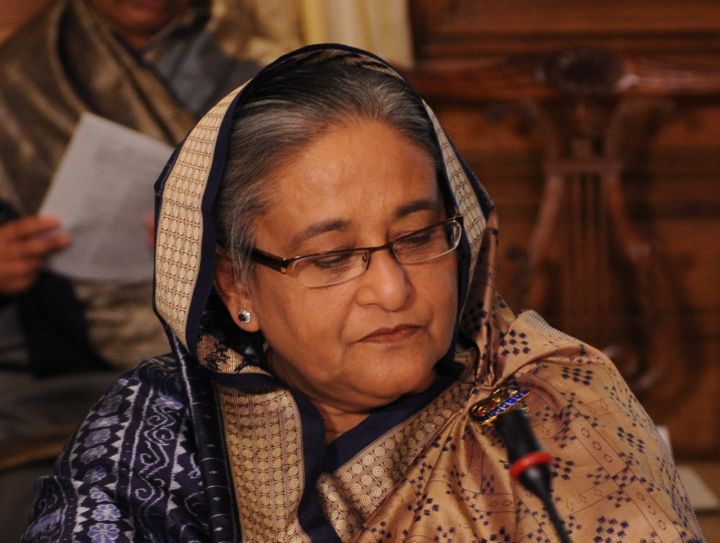
📷 Image: Wikimedia Commons / Foreign and Commonwealth Office
Politics
Hasina’s firm grip steers Bangladesh’s India policy as Tarique Rahman balances pro‑ and anti‑India stance
✍️ ThePrint
🗓 20 Aug 2026, 08:40 PM
👁 37
Bangladesh’s foreign policy towards India remains under Prime Minister Sheikh Hasina’s strong influence, while opposition leader Tarique Rahman walks a tightrope between supporting and opposing New Delhi.
Prime Minister Sheikh Hasina continues to dominate Bangladesh’s approach to India, ensuring that any diplomatic or economic engagement aligns closely with her government’s strategic priorities. Her firm stance has been described as a “sword” that shapes how Dhaka negotiates issues ranging from trade to water sharing with New Delhi.
Opposition figure Tarique Rahman, son of former BNP chief Khaleda Zia, is attempting to navigate a dual narrative. He alternates between praising India’s role in regional stability and criticizing perceived interference, a tactic aimed at broadening his political appeal.
Analysts say the contrasting positions underscore a broader contest for influence over Bangladesh’s foreign policy, with Hasina’s administration holding the decisive levers while the opposition seeks to leverage public sentiment on India‑related matters.
The dynamic is likely to affect upcoming bilateral talks, as both sides monitor each other’s moves closely.
Overall, Bangladesh’s India policy remains a focal point of domestic politics, reflecting the interplay between a dominant ruling party and a resurgent opposition seeking relevance.
Opposition figure Tarique Rahman, son of former BNP chief Khaleda Zia, is attempting to navigate a dual narrative. He alternates between praising India’s role in regional stability and criticizing perceived interference, a tactic aimed at broadening his political appeal.
Analysts say the contrasting positions underscore a broader contest for influence over Bangladesh’s foreign policy, with Hasina’s administration holding the decisive levers while the opposition seeks to leverage public sentiment on India‑related matters.
The dynamic is likely to affect upcoming bilateral talks, as both sides monitor each other’s moves closely.
Overall, Bangladesh’s India policy remains a focal point of domestic politics, reflecting the interplay between a dominant ruling party and a resurgent opposition seeking relevance.