
📷 Image: Wikimedia Commons / Jogindergurjar
Religion
Gurjar Community in Kekri Observes Age‑Old Diwali Ritual of Pitr‑Tarpan at Local Ponds
✍️ Amar Ujala · Ajmer
🗓 08 Nov 2026, 04:15 PM
👁 13
On Diwali, the Gurjar community in Kekri, Rajasthan, performed the centuries‑old tradition of offering pitr‑tarpan at village ponds, accompanied by khir‑churme and other rites.
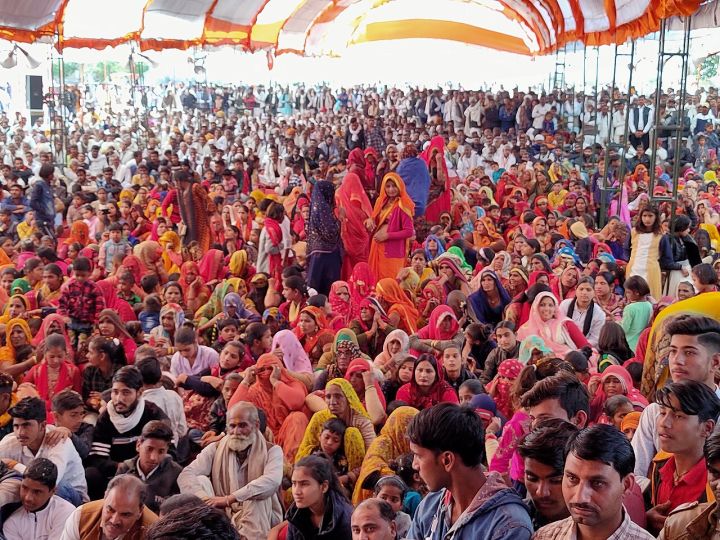
The Gurjar community in the town of Kekri, Ajmer district, marked the Diwali festival by conducting the traditional pitr‑tarpan ceremony at several village ponds. The ritual, which dates back generations, involved families gathering at the water bodies to offer prayers to their ancestors.
Participants prepared a sweet offering of khir mixed with churme, which was floated on the pond surface as part of the homage. The ceremony also featured the use of the aandi‑jhda (wind‑bent) vine, a customary element in Gurjar rites, to symbolise the connection between the living and the departed.
In addition to the ancestral rites, the community welcomed newborn infants by distributing pieces of jaggery, a gesture meant to invoke blessings for the children’s health and prosperity. The event highlighted the continuity of cultural practices that bind the Gurjar population of Rajasthan to their heritage.
Local elders noted that such observances reinforce communal bonds and serve as a reminder of the region’s rich folk traditions, especially during major festivals like Diwali.