
📷 Image: Times of India (via NewsData)
Science
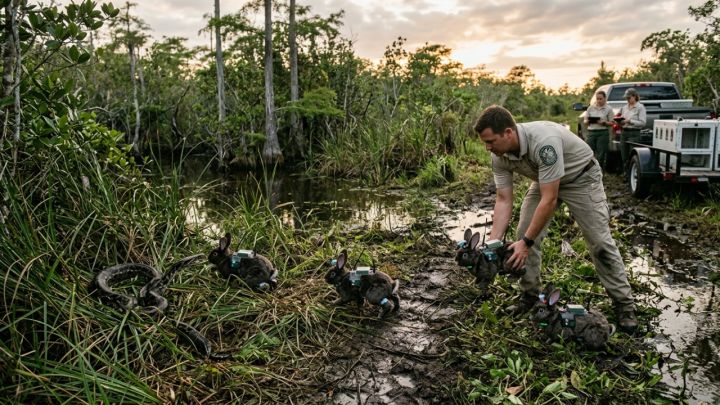
Florida tests solar‑powered robot rabbits to detect invasive Burmese pythons in Everglades
✍️ Times of India
🗓 27 Sep 2026, 04:39 AM
👁 11
Florida is trialling solar‑powered robot rabbits that emit heat and scent to lure invasive Burmese pythons in the Everglades, with AI cameras flagging snakes for removal teams.
The South Florida Water Management District, in partnership with the University of Florida, has begun field tests of solar‑powered robotic rabbits designed to locate invasive Burmese pythons in the Everglades. The decoys are engineered to mimic natural prey by radiating body heat and releasing scent cues that attract the large snakes.
Each robot is equipped with an artificial‑intelligence‑driven camera system that monitors approaching movement. When a python is detected, the system sends an alert to trained removal agents, who can then intervene before the reptile moves deeper into the fragile ecosystem.
Burmese pythons, introduced illegally as exotic pets, have proliferated across the wetlands, preying on native wildlife and disrupting ecological balance. Traditional control methods rely on manual searches and trapping, which are labor‑intensive and often ineffective. The new robotic approach adds a technological layer to Florida's broader python‑management strategy, aiming to improve detection rates and response times.
Officials indicated that the pilot will run through the upcoming wet season, after which data on detection accuracy and operational durability will be evaluated to determine wider deployment across the park.
If successful, the robot‑rabbit system could become a model for using autonomous decoys in other invasive‑species battles worldwide.
Each robot is equipped with an artificial‑intelligence‑driven camera system that monitors approaching movement. When a python is detected, the system sends an alert to trained removal agents, who can then intervene before the reptile moves deeper into the fragile ecosystem.
Burmese pythons, introduced illegally as exotic pets, have proliferated across the wetlands, preying on native wildlife and disrupting ecological balance. Traditional control methods rely on manual searches and trapping, which are labor‑intensive and often ineffective. The new robotic approach adds a technological layer to Florida's broader python‑management strategy, aiming to improve detection rates and response times.
Officials indicated that the pilot will run through the upcoming wet season, after which data on detection accuracy and operational durability will be evaluated to determine wider deployment across the park.
If successful, the robot‑rabbit system could become a model for using autonomous decoys in other invasive‑species battles worldwide.