
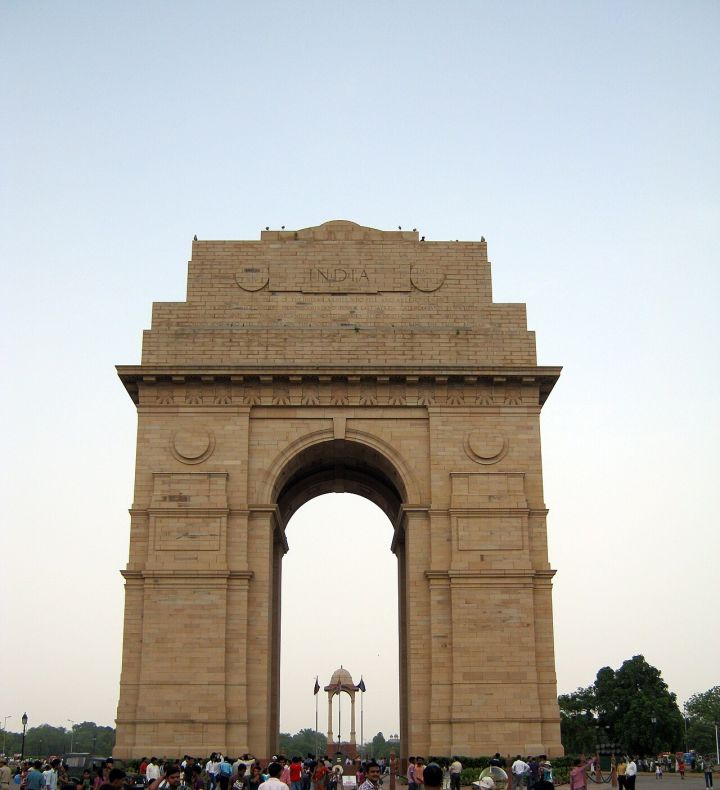
📷 Image: Wikimedia Commons / Subeesh Balan സുഭീഷ് ബാലൻ
National
Delhi vs New Delhi: Clarifying the Distinct Administrative Units
✍️ Business Today
🗓 22 Aug 2026, 09:36 AM
👁 84
Delhi and New Delhi are often confused, but they are separate administrative entities. Delhi is a union territory with its own legislature, while New Delhi is a district that houses the central government’s institutions.
Delhi, officially the National Capital Territory of Delhi, functions as a union territory with a partially elected legislative assembly and a chief minister. It covers an area of about 1,484 square kilometres and is divided into 11 districts, each overseen by the Delhi government and the Lieutenant Governor appointed by the President.
New Delhi, on the other hand, is one of those districts, occupying roughly 42 square kilometres in the heart of the capital. It was designed by British architect Edwin Lutyens and serves as the seat of the Union Government, hosting the Parliament House, Rashtrapati Bhavan, and numerous ministries.
Because New Delhi houses the central institutions, its administration falls under the Ministry of Housing and Urban Affairs, and it does not have a separate elected body. The distinction matters for governance, budgeting, and civic services, as residents of New Delhi receive certain services directly from the central government, while the rest of Delhi relies on the territorial administration.
The confusion often arises in media and public discourse, but legally the two are distinct: Delhi is a broader political entity with its own elected government, whereas New Delhi is a specific district within that entity, dedicated to the functioning of the national government.
New Delhi, on the other hand, is one of those districts, occupying roughly 42 square kilometres in the heart of the capital. It was designed by British architect Edwin Lutyens and serves as the seat of the Union Government, hosting the Parliament House, Rashtrapati Bhavan, and numerous ministries.
Because New Delhi houses the central institutions, its administration falls under the Ministry of Housing and Urban Affairs, and it does not have a separate elected body. The distinction matters for governance, budgeting, and civic services, as residents of New Delhi receive certain services directly from the central government, while the rest of Delhi relies on the territorial administration.
The confusion often arises in media and public discourse, but legally the two are distinct: Delhi is a broader political entity with its own elected government, whereas New Delhi is a specific district within that entity, dedicated to the functioning of the national government.