
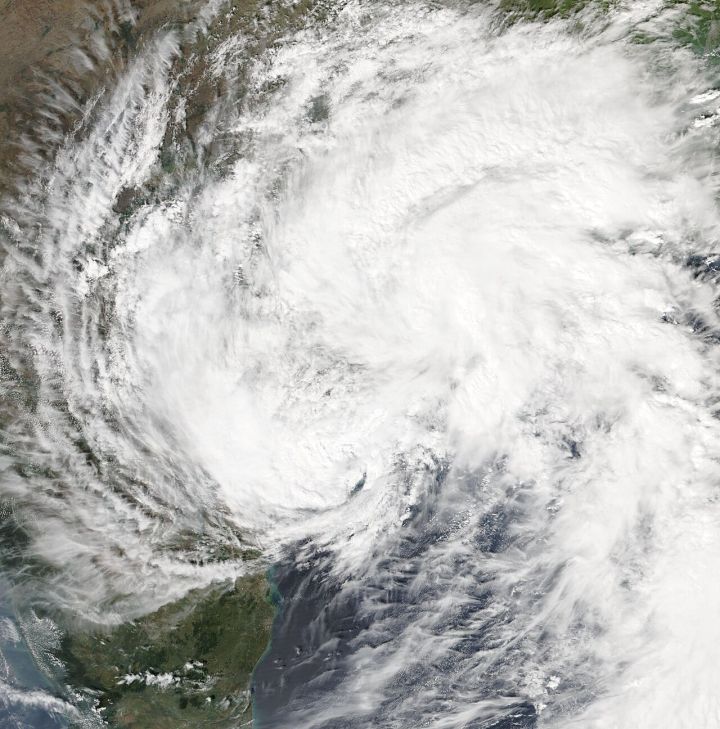
📷 Image: Wikimedia Commons / NASA
Weather
Cyclone Arnab moves past Indian coast as Murasu looms ahead
✍️ Bhaskar English
🗓 03 Nov 2026, 05:38 AM
👁 18
Cyclone Arnab has traversed the Indian Ocean, sparing the mainland but prompting alerts, while a second system, Cyclone Murasu, is expected to develop within days.
The tropical cyclone named Arnab, classified as a severe cyclonic storm, moved westward across the central Indian Ocean on Monday, staying well offshore of the Indian coastline. Meteorological agencies reported that the system maintained wind speeds of around 120 km/h, with its eye passing approximately 350 km east of the coast of Andhra Pradesh. No landfall occurred, and coastal districts reported only minor sea swell and isolated rain showers.
The India Meteorological Department (IMD) issued a high tide advisory for the east coast, urging fishermen to remain in safe harbors and reminding residents to stay alert for any sudden changes. Early assessments indicate that Arnab caused no significant damage to infrastructure or agriculture, but the rough seas disrupted some fishing activities and delayed a few cargo vessels.
Within 48 hours, satellite imagery shows a new low-pressure area consolidating into Cyclone Murasu in the Bay of Bengal. IMD has placed Murasu under a watch, forecasting that it could intensify to a cyclonic storm before approaching the eastern seaboard. Authorities are preparing contingency plans, including pre‑emptive evacuation drills in vulnerable coastal districts.
Experts highlighted that the back‑to‑back occurrence of Arnab and the impending Murasu underscores a pattern of heightened cyclonic activity this season, linked to warmer sea surface temperatures in the Indian Ocean. Residents are advised to keep emergency kits ready and stay tuned to official bulletins.
The IMD will continue to monitor both systems and provide updates on their trajectories, intensity, and potential impact on coastal communities across the region.