
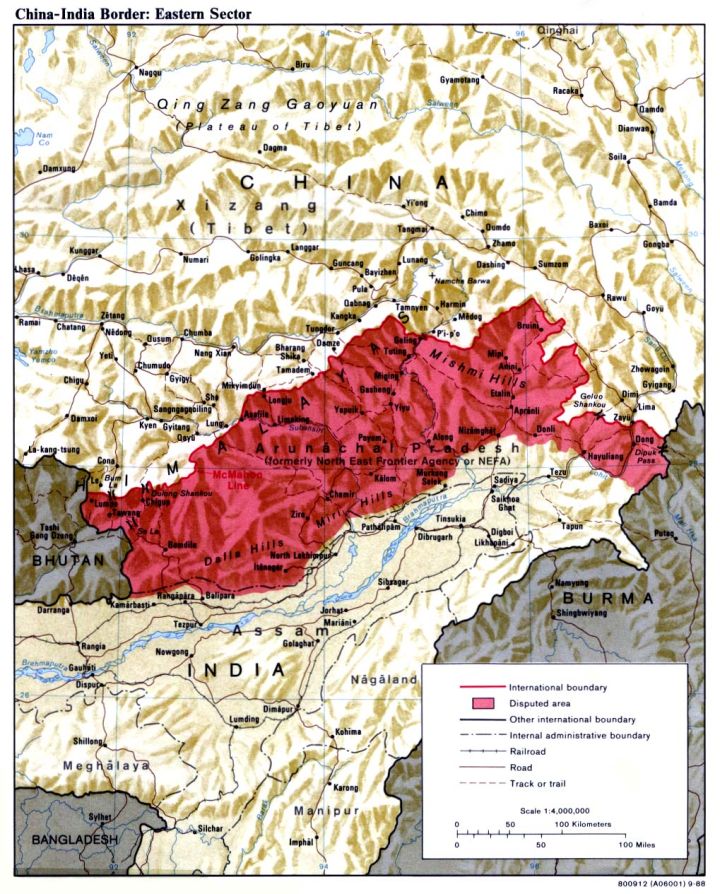
📷 Image: Wikimedia Commons / Central Intelligence Agency
Defence
China Calls Arunachal Pradesh 'Zangnan' After Border Talks
✍️ Firstpost
🗓 27 Nov 2026, 03:18 AM
👁 35
Following recent talks aimed at restoring calm along the Sino-Indian frontier, Beijing has once again referred to India's Arunachal Pradesh as 'Zangnan', a term that underscores the ongoing territorial dispute.
In the days following a series of talks between Indian and Chinese officials aimed at easing tensions along the disputed border, Beijing released a statement in which it again referred to the Indian state of Arunachal Pradesh as "Zangnan".
The term "Zangnan" has long been used by Chinese authorities to denote the territory they claim as part of Tibet. The statement was issued shortly after the two sides met in New Delhi to discuss measures for maintaining peace and stability in the region.
India has consistently rejected the use of the name, insisting that Arunachal Pradesh is an integral part of the Indian Union. The Indian Ministry of External Affairs issued a brief response, calling the statement "unacceptable" and reaffirming its stance on the territorial integrity of the state.
The incident highlights the fragility of Sino-Indian relations in the border area and the challenges the two countries face in translating diplomatic dialogue into lasting confidence‑building measures.