
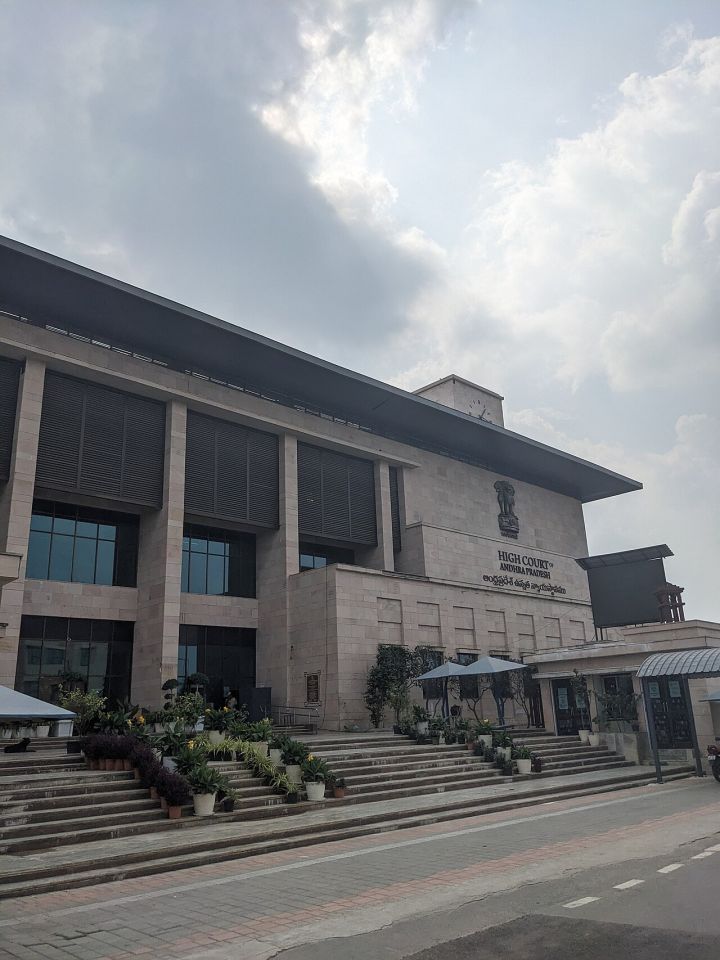
📷 Image: Wikimedia Commons / Saiphani02
Politics
Andhra Pradesh High Court Dismisses All Challenges to Three‑Capital Scheme
✍️ Hindustan Times
🗓 27 Sep 2026, 09:16 AM
👁 9
The Andhra Pradesh High Court ruled that all petitions contesting the state's three‑capital plan are untenable, clearing the way for the government to proceed.
The Andhra Pradesh High Court delivered a decisive verdict, stating that every petition filed against the state's three‑capital blueprint has been found without merit. The plan, which earmarks Amaravati as the legislative capital, Visakhapatnam as the executive hub and Kurnool as the judicial centre, has been a cornerstone of the state government's development strategy since its announcement in 2020.
In a detailed order dated 27 September 2026, a bench of senior judges concluded that the challenges raised—ranging from procedural lapses to alleged violations of constitutional provisions—were not substantiated. The court emphasized that the legislative process that approved the scheme complied with existing statutes, rendering the objections ineffective.
The ruling removes a major legal hurdle for the Y.S. Jagan Mohan Reddy administration, allowing it to advance infrastructure projects and allocate funds without further judicial interference. Opposition leaders, while expressing disappointment, pledged to continue political advocacy within democratic channels.
Legal experts view the judgment as a reinforcement of the state's autonomy in planning its administrative geography, noting that similar multi‑capital models have been adopted elsewhere in India. The decision is expected to accelerate land acquisition and construction activities across the three designated cities.
Stakeholders in the construction and real‑estate sectors have welcomed the clarity, anticipating a surge in investments as the government moves forward with detailed project reports and public‑private partnership frameworks.
In a detailed order dated 27 September 2026, a bench of senior judges concluded that the challenges raised—ranging from procedural lapses to alleged violations of constitutional provisions—were not substantiated. The court emphasized that the legislative process that approved the scheme complied with existing statutes, rendering the objections ineffective.
The ruling removes a major legal hurdle for the Y.S. Jagan Mohan Reddy administration, allowing it to advance infrastructure projects and allocate funds without further judicial interference. Opposition leaders, while expressing disappointment, pledged to continue political advocacy within democratic channels.
Legal experts view the judgment as a reinforcement of the state's autonomy in planning its administrative geography, noting that similar multi‑capital models have been adopted elsewhere in India. The decision is expected to accelerate land acquisition and construction activities across the three designated cities.
Stakeholders in the construction and real‑estate sectors have welcomed the clarity, anticipating a surge in investments as the government moves forward with detailed project reports and public‑private partnership frameworks.