
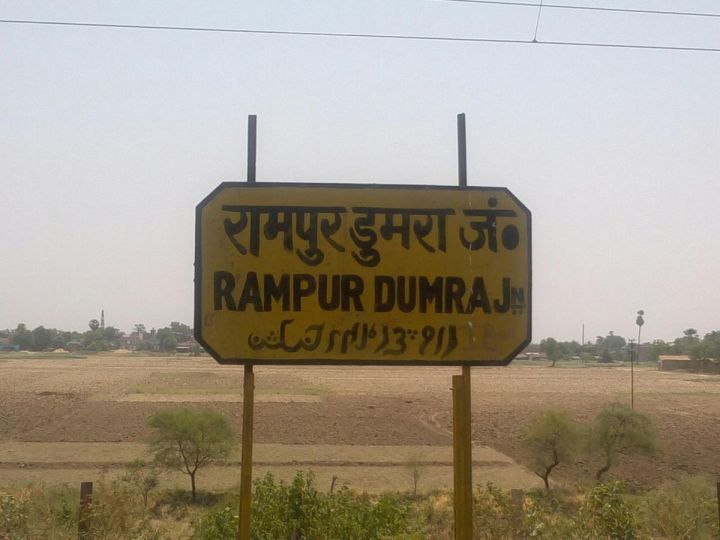
📷 Image: Wikimedia Commons / Rampur dumra
Local
383 Trains Disrupted in Bihar as Work at Rampur Dumra and Tal Junctions Continues till Oct 4
✍️ Amar Ujala · Bihar
🗓 21 Sep 2026, 07:31 PM
👁 10
From Sept 21 to Oct 4, operations of 383 trains passing through Rampur Dumra and Tal junctions in Bihar will be altered, with several services cancelled, partially run or diverted due to pre‑non‑interlocking and interlocking work.
The Indian Railways has announced that from 21 September to 4 October, train operations through Rampur Dumra Junction and Tal Junction in Bihar will be affected. The disruption is caused by ongoing pre‑non‑interlocking and interlocking work aimed at upgrading the signalling infrastructure at both stations.
A total of 383 scheduled services are expected to face changes. Several trains will be fully cancelled, while others will run on a reduced schedule or be diverted onto alternate routes to bypass the work zones.
Passengers are advised to check the latest train status on the official railway portal or mobile app before planning travel. Ticket counters at affected stations will display updated information, and travelers may seek refunds or rebooking for cancelled services.
Railway officials have urged commuters to allow extra travel time and to cooperate with staff handling the temporary arrangements, emphasizing that the work is essential for long‑term safety and efficiency improvements.
A total of 383 scheduled services are expected to face changes. Several trains will be fully cancelled, while others will run on a reduced schedule or be diverted onto alternate routes to bypass the work zones.
Passengers are advised to check the latest train status on the official railway portal or mobile app before planning travel. Ticket counters at affected stations will display updated information, and travelers may seek refunds or rebooking for cancelled services.
Railway officials have urged commuters to allow extra travel time and to cooperate with staff handling the temporary arrangements, emphasizing that the work is essential for long‑term safety and efficiency improvements.