
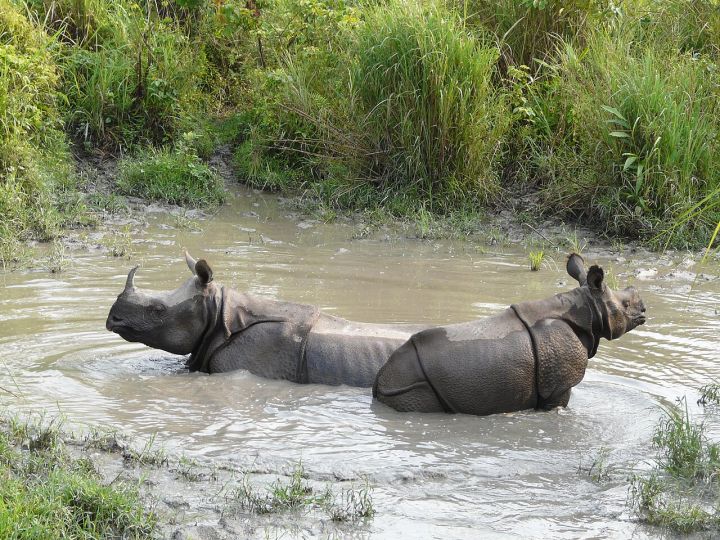
📷 Image: Wikimedia Commons / A. J. T. Johnsingh, WWF-India and NCF
Crime
105 Rhino Horns Destroyed in West Bengal’s Jaldapara on World Rhino Day
✍️ mid-day.com
🗓 28 Sep 2026, 04:01 AM
👁 10
On World Rhino Day, forest officials in Jaldapara, West Bengal, destroyed 105 rhino horns to curb illegal wildlife trade.
On World Rhino Day, officials of the West Bengal Forest Department carried out a large‑scale destruction of rhino horns at Jaldapara Wildlife Sanctuary. A total of 105 horns, seized from previous trafficking investigations, were incinerated in a controlled operation.
The move is part of a broader effort to dismantle the illegal wildlife trade network that targets endangered species such as the Indian one‑horned rhinoceros. Authorities said the horns were collected over several months and were slated for destruction to prevent their re‑entry into black markets.
Forest officials emphasized that destroying the horns sends a clear deterrent signal to smugglers and reinforces India’s commitment to wildlife protection under the CITES framework. They also announced plans to increase surveillance and community awareness in the region to further curb poaching activities.
The ceremony was attended by senior forest officers and representatives of wildlife NGOs, who hailed the action as a concrete step toward safeguarding the remaining rhino population in the state.
The destruction underscores the challenges faced by conservation agencies in a state that hosts one of the world’s largest populations of the Indian rhino, and it highlights the need for continued vigilance against trafficking networks.
The move is part of a broader effort to dismantle the illegal wildlife trade network that targets endangered species such as the Indian one‑horned rhinoceros. Authorities said the horns were collected over several months and were slated for destruction to prevent their re‑entry into black markets.
Forest officials emphasized that destroying the horns sends a clear deterrent signal to smugglers and reinforces India’s commitment to wildlife protection under the CITES framework. They also announced plans to increase surveillance and community awareness in the region to further curb poaching activities.
The ceremony was attended by senior forest officers and representatives of wildlife NGOs, who hailed the action as a concrete step toward safeguarding the remaining rhino population in the state.
The destruction underscores the challenges faced by conservation agencies in a state that hosts one of the world’s largest populations of the Indian rhino, and it highlights the need for continued vigilance against trafficking networks.