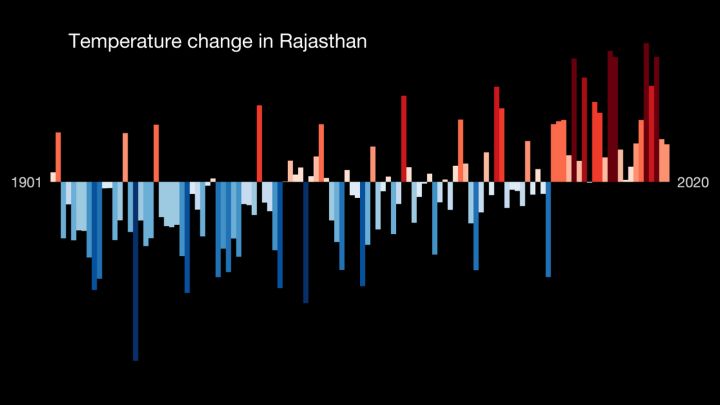
📷 Image: Wikimedia Commons / Ed Hawkins, University of Reading
Weather
Rajasthan Records Temperatures Lower Than Shimla as IMD Issues Rain Alert for 10 States
✍️ Dynamite News
🗓 29 Nov 2026, 11:01 AM
👁 20
The India Meteorological Department has issued a rain alert covering ten states as temperatures in Rajasthan have fallen below those recorded in Shimla, traditionally one of the country’s coldest hill stations.
The India Meteorological Department (IMD) on Monday announced a rain alert that spans ten states across northern and central India, urging residents to stay prepared for possible showers in the coming days. The advisory cites an approaching low‑pressure system that is expected to bring moderate to heavy rainfall to the affected regions.
In an unusual weather pattern, Rajasthan has recorded temperatures that are lower than those in Shimla, a hill station renowned for its chilly climate. Early morning readings in several districts of Rajasthan hovered around 10 °C, whereas Shimla’s temperature remained above 12 °C. The cold snap has prompted concerns among farmers and commuters, especially in the desert‑bordering areas where frost can damage crops.
IMD’s forecast predicts scattered showers across the ten states, with the intensity likely to increase by evening. Authorities have advised people to secure loose objects, avoid non‑essential travel in flood‑prone zones, and stay updated with local bulletins. The department will continue to monitor the system and may upgrade the warning if conditions worsen.