
📷 Image: Wikimedia Commons / Jaskarn SH SD
Agriculture
Punjab Falls Short on Straw Management Targets, Production and Storage Lagging
✍️ Amar Ujala · Punjab
🗓 23 Nov 2026, 08:16 AM
👁 31
Despite increased resources, Punjab could not meet its straw management goals on three key fronts, with pellet‑briquette output and storage capacity remaining insufficient.
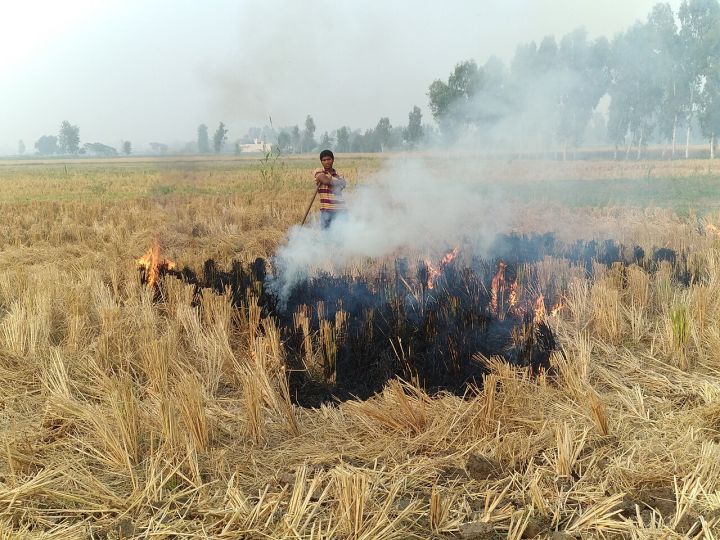
The Punjab government has expanded funding and schemes aimed at better straw (parali) management, yet recent assessments show that the state missed its set targets on three critical fronts. While collection efforts have improved marginally, the conversion of straw into pellet‑briquettes has not seen the expected rise, and storage facilities remain inadequate to handle the volume harvested.
Officials had projected a substantial increase in pellet‑briquette production to reduce open burning, but field data indicates that output remains below the planned figures. The shortfall is attributed to limited processing capacity and delays in commissioning new plants.
Compounding the issue, storage infrastructure—both temporary and permanent—has not expanded proportionally, leaving farmers with limited options for safely stockpiling straw. The combined gaps threaten the state's objective of curbing air pollution and improving farmer income through value‑added straw products.
State agricultural officers acknowledge the gaps and have pledged further coordination with private processors, but concrete timelines for scaling up production and storage remain pending.